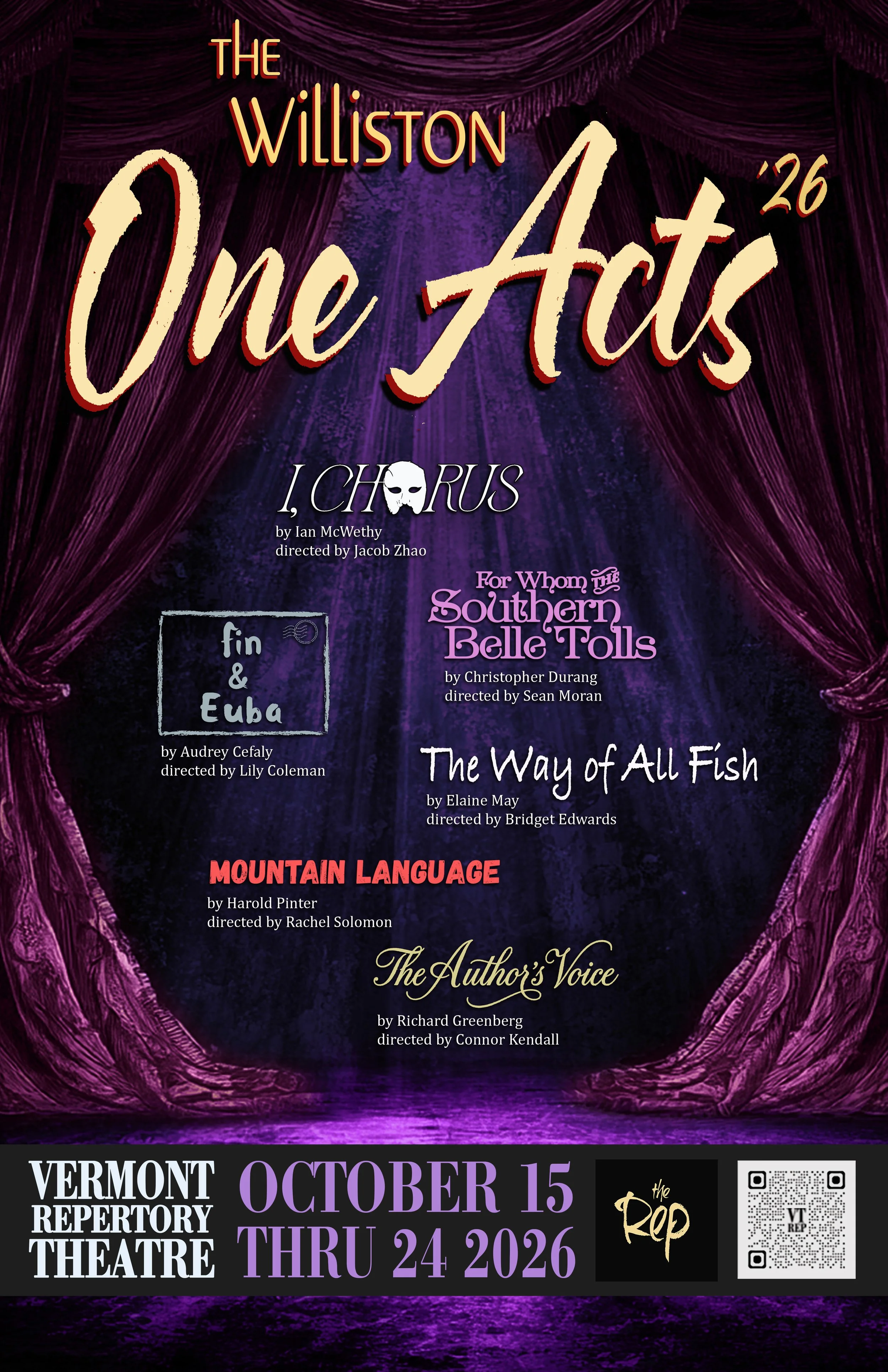
Two weeks. Six directors. One stage.
A two week theatre festival at our home, The Rep, in the heart of Williston. It’s our favorite time of year, when we create a supportive, collaborative theatrical environment to learn, experiment and let inspiration shine. Designed for new folks wanting to learn, or old hands wanting an easy way to get back in, it’s a low-pressure, high-fun experience for everyone. Come and be part of it.

This festival features a number of plays written in previous decades and centuries. In our commitment to artistic integrity, these works are being presented as they were originally written. As a result, you may encounter language, attitudes, and terminology that reflect the cultural norms of the era in which they were written, but are considered offensive or harmful by today’s standards. We appreciate your understanding as we explore these pieces in their authentic historical context.
Scroll down to see the shows....
The Way of All Fish
By Elaine May
Directed by Bridget Edwards
“All the rules are changed.”
New York City, 1998. Ms. Asquith and her secretary, Ms. Riverton, swim in uncharted waters in Elanie May’s delightfully dark comedy, The Way of All Fish. Unforeseen circumstances have left Ms. Asquith with no Friday evening plans. An impromptu dinner invitation, and some very good wine, reveal the depths to which each woman is willing to go to be the biggest fish.
Their dinner takes turns both comic and macabre as Ms. Asquith and Ms. Riverton’s awkward getting-to-know-you chitchat becomes an exploration into the nature of power – getting and keeping it. Is the mere appearance of power enough, or do you also need to be able to back it up with physical strength?
The Way of All Fish was first produced at Manhattan Theatre Club as part of Power Plays, an evening of one-acts written by May and Alan Arkin.
THE WAY OF ALL FISH is presented by arrangement with Concord Theatricals on behalf of Samuel French INC. www.concordtheatricals.comCAST INCLUDES:
Nica Allen, Lila Stratton
Mountain Language
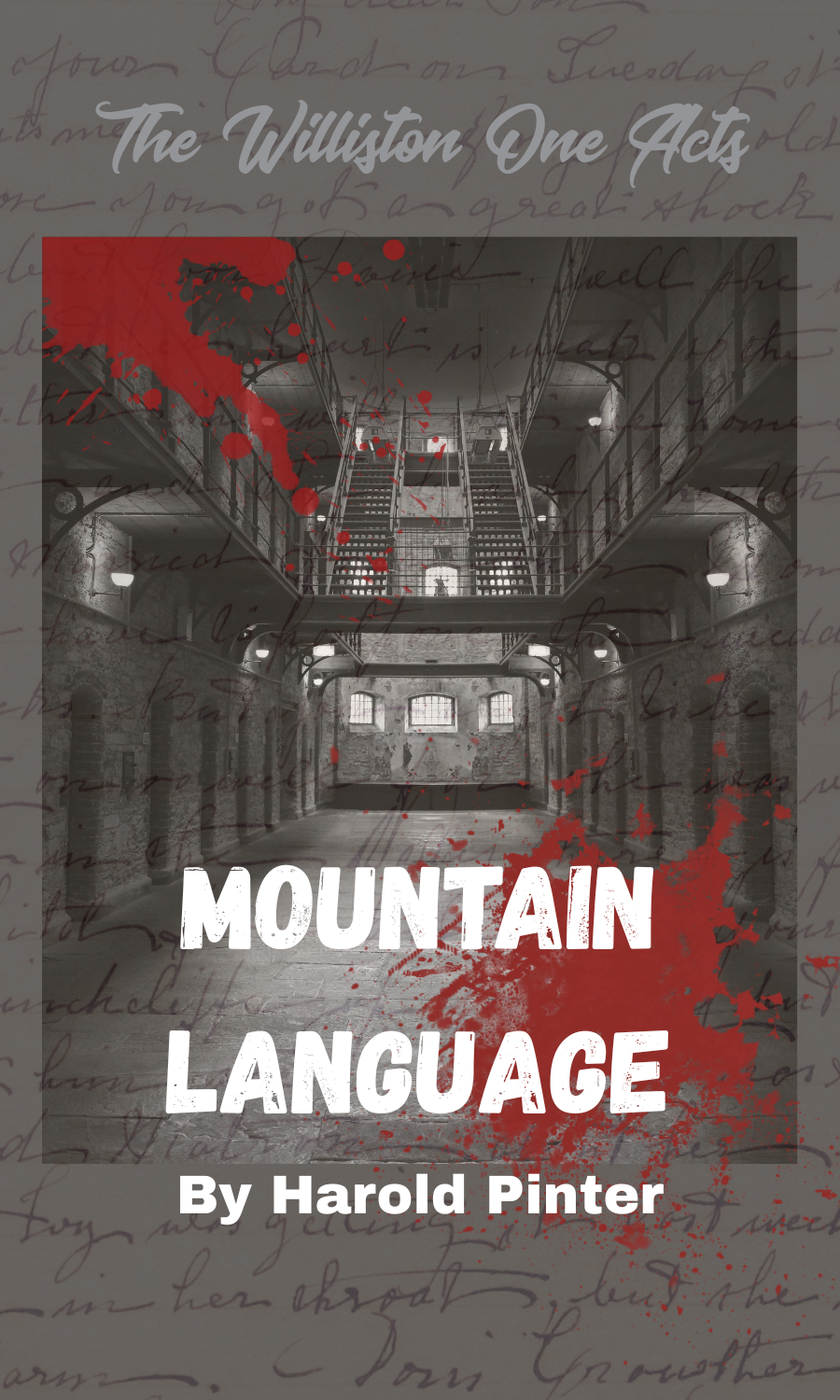
By Harold Pinter
Directed by Rachel Solomon
Harold Pinter’s Mountain Language focuses on a brutal society where a minority of the population is forbidden from speaking their own language. Mountain Language utilizes a unique blend of absurdism and realism, silence and language to convey the suffering of political prisoners struggling to survive within a system specifically geared towards their oppression.
MOUNTAIN LANGUAGE is presented by arrangement with Concord Theatricals on behalf of Dramatists Play Service. www.concordtheatricals.comCAST INCLUDES:
Sorsha Anderson, Benjamin J. Fox, Kimberly Rockwood, Lee Chasen, Brian G. Hartz, Jesse Cooper, Clem Turmel, Kevin O’Brien
The Author’s Voice
By Richard Greenberg
Directed by Connor Kendall
The Author's Voice by Richard Greenberg is a story about art, ownership, and the human desire to be seen. Todd and Gene have a...unique relationship. Todd is pretty...and that's about it. He dreams of stardom but has no means to achieve it. Gene is a literal goblin who has a magical way with words. Together, they hope to odd couple their way to literary fame with Todd's face plastered over Gene's words. When overeager editor Portia gets involved, the delicate balance the pair has struck is thrown off kilter...and might never recover. What lengths are each willing to go to wield the power of "their" words?
THE AUTHOR'S VOICE is presented by arrangement with Concord Theatricals on behalf of Dramatists Play Service. www.concordtheatricals.comCAST INCLUDES:
Jay Rivera III, Benjamin Villa, Stefanie Seng
For Whom the Southern Belle Tolls
by Christopher Durang
Directed by Sean Moran
Durang’s parody transforms Williams’s drama Glass Menagerie into frantic comedy as Amanda hunts a “feminine caller” for fragile Lawrence, who hoards glass stirrers. Tom flees to sailor-filled “movies,” while loud Ginny derails romance. The play skewers Southern melodrama, fragile egos, and nostalgia with chaotic, high-energy absurdity in every wild scene and moment.
FOR WHOM THE SOUTHERN BELLE TOLLS is presented by arrangement with Concord Theatricals on behalf of Dramatists Play Service. www.concordtheatricals.comCAST INCLUDES:
Mary Scripps, George Sullivan, Ben Ash, Hayley Ryan, Harrison Brown
Fin and Euba
by Audrey Cefaly
Directed by Lily Coleman
Two paper mill laborers living in a deep south boarding home shoot the breeze; complaining and contemplating the directions of their lives. Fin, the more assured of the two, attempts to encourage an apprehensive Euba to go after her dream of becoming a professional photojournalist. Euba is equally terrified of both success and failure. Frozen in fear, will she choose to face the unknown?
FIN AND EUBA is presented by arrangement with Concord Theatricals on behalf of Samuel French INC. www.concordtheatricals.comCAST INCLUDES:
Linda Iannuzzi, Stacia Richard
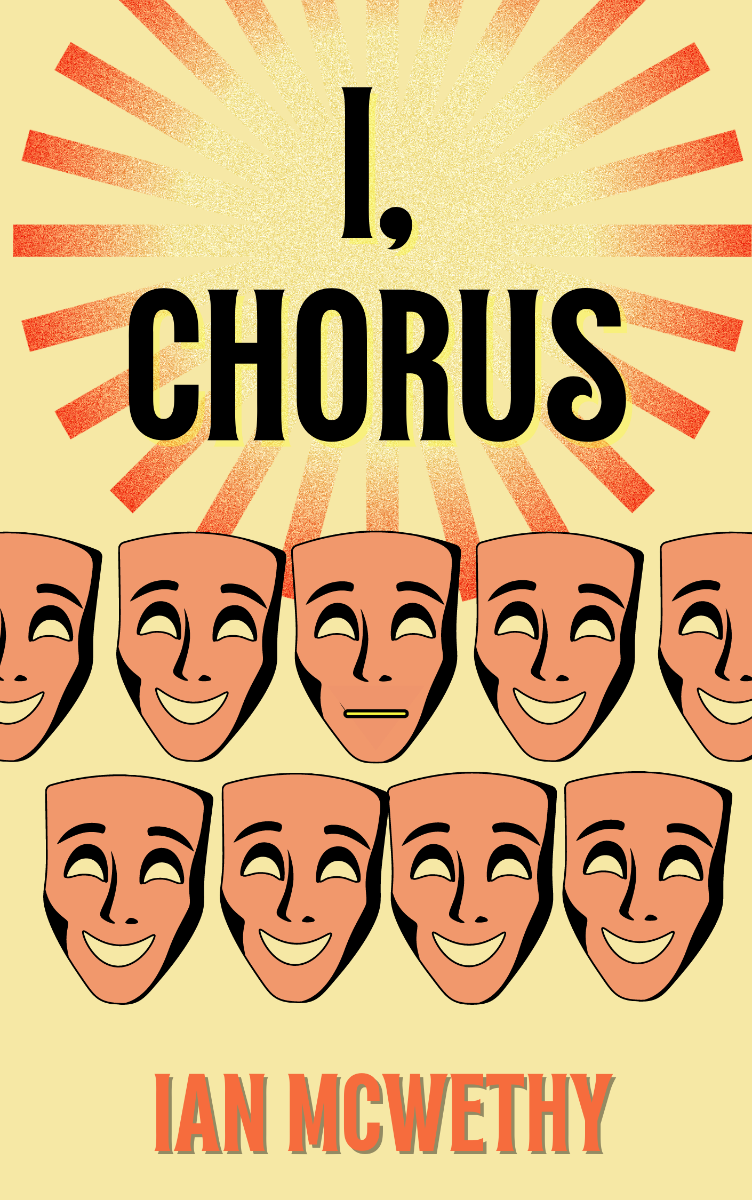
I, Chorus
by Ian McWethy
Directed by Jacob Zhao
College dropout Elle is lost in life, until she meets a Greek Chorus devoted to speaking in unison. And working at Walmart in unison. And going on dates in unison. To join them, Elle must give up her friends, family, and life as she knows it — but maybe, just maybe, it's exactly what she's been looking for. Elle's journey to find her place in the world asks the audience to see themselves reflected in the nameless, faceless mass of the Greek Chorus, and highlights both the beauty and absurdity of its unity. I, Chorus is hopeful, haunting, and hilarious, all while celebrating the joy of finding a community to which one truly belongs.
I, CHORUS, is presented by special arrangement with Stage Partners. www.yourstagepartners.comCAST INCLUDES:
Georgia Lambrakis, Lauren Terry, Gryphon Rossi, Brandon Maheu, Alise Certa, Katie Owens, Daniel Solomon